Getting a van ready to sell usually comes down to three things: sorting the paperwork, improving how the vehicle looks, and deciding whether to fix faults or sell as-is for a fast turnaround.
This guide walks you through the documents buyers expect, simple cleaning and photo tips, small repairs that offer the best return, and low-effort ways to boost interest without a full restoration.
If speed matters more than top price, we also cover instant-buy options that take vans in any condition and handle most of the admin for you.
Read on for a clear, step-by-step approach, documentation essentials, a quick clean and photo checklist, a cost-versus-value view on small repairs, and practical tips to sell fast or skip prep entirely. This advice is for UK sellers of vans, motorhomes and light commercial vehicles.
What Documents Do You Need To Sell A Van In The Uk?
Paperwork proves ownership, confirms recent checks and reassures buyers, and that affects how fast you sell and what offers you’ll get. The key papers most buyers want are the V5C logbook, a recent MOT certificate and any service history or receipts.
Having clear copies ready speeds up viewings and reduces negotiation time. Missing documents usually lower offers or mean extra checks. Below, we break down each document, what to do if it’s missing, and how instant buyers handle limited paperwork.
Essential Paperwork For Selling A Van
Private buyers and dealers commonly ask for a few key documents to complete a lawful sale: the V5C logbook (shows the registered keeper and is needed to transfer ownership), an MOT certificate (evidence of recent inspections) and service history/receipts (show maintenance).
Make copies of originals and prepare a short list of recent services to include with your advert, transparency speeds up negotiations. If you can’t find originals, applying for a replacement V5C from the DVLA is the usual fix, but it can take 6–8 weeks, a factor when choosing a private sale or a faster alternative.
Selling A Van Without Full Documentation
Not having a full MOT or service history lowers private-sale value but doesn’t stop a sale. Be upfront in your advert, provide whatever records you do have (receipts, MOT history from the DVLA online service), and expect lower offers.
If replacing documents is impractical, consider instant-buy services that specialise in as-seen purchases and can often proceed with minimal paperwork and a simplified transfer process.
The table below shows common documents, whether they’re usually required for a private sale, and how an instant buyer might handle missing paperwork.
| Document | Required for private sale? | How an instant buyer handles missing paperwork |
|---|---|---|
| V5C logbook | Usually required to transfer legal ownership | An instant buyer often accepts the vehicle and guides you through replacement or simplified transfer steps |
| MOT certificate | Usually expected by private buyers for roadworthy vehicles | Often accepted even if missing or failed, price adjusted accordingly |
| Service history/receipts | Valued to maximise price | Often accepted without full records; affects offer size but not eligibility |
V5C, MOT and service history have the biggest impact on private-sale price and speed. Instant buyers reduce the paperwork burden if you value speed over the absolute top price. Next, we look at presentation and repairs and how they shift the balance between private sale effort and instant-sell convenience.
How Should You Clean And Present Your Van For Sale?
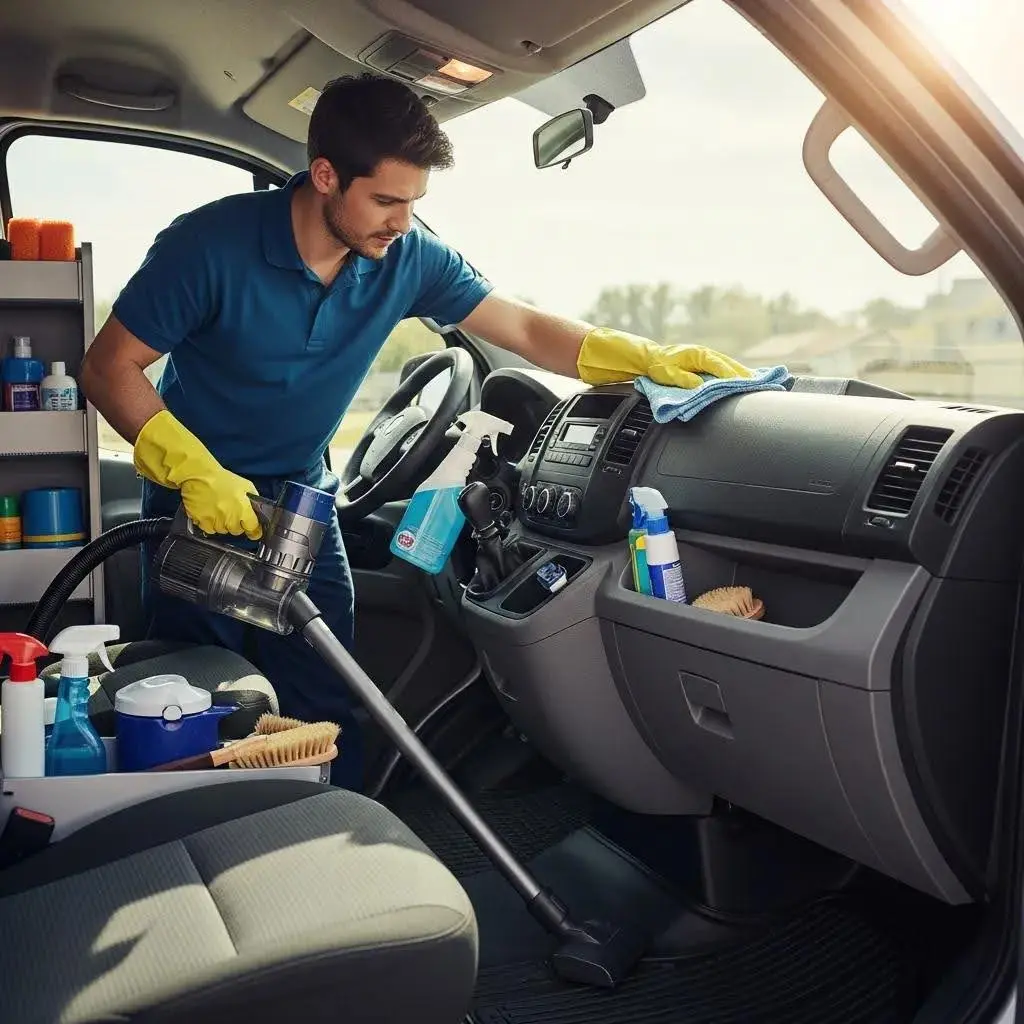
First impressions matter: a tidy van suggests it’s been looked after and usually shortens time on the market. A dirty cab or load bay invites low offers. A straightforward, clear, and good photos help buyers assess value before they visit. The checklist and photography tips below focus on quick, high-impact tasks most sellers can finish in under an hour.
Van Cleaning Tips
Start with the basics that make the biggest difference: wash and degrease the exterior, clean wheels and glass, vacuum and wipe the cab, and sweep the load bay. Remove personal items and any strong smells so buyers can picture using the vehicle.
Secure or remove loose fittings to avoid negative feedback in ads. Photograph the van in daylight from eye level, three‑quarter front, rear, load bay and interior shots give a clear view. These quick tasks usually drive better online interest and fewer awkward viewings.
How Cleaning Affects Sale Value
Cleaning boosts perceived value and often speeds up offers rather than producing a big price jump. A tidy interior and clear photos tend to prevent lowball offers and speed negotiations.
Major mechanical faults or missing paperwork still have the biggest impact, so cleaning is most effective when the van is broadly sound. If you don’t want to invest time, instant buyers can buy vans in a wide range of conditions, avoiding valeting costs and prep altogether.
Decide whether a quick clean or an instant sale suits your priorities; the next section covers minor repairs and when they’re worth doing.
What Minor Repairs Should You Consider Before Selling Your Van?
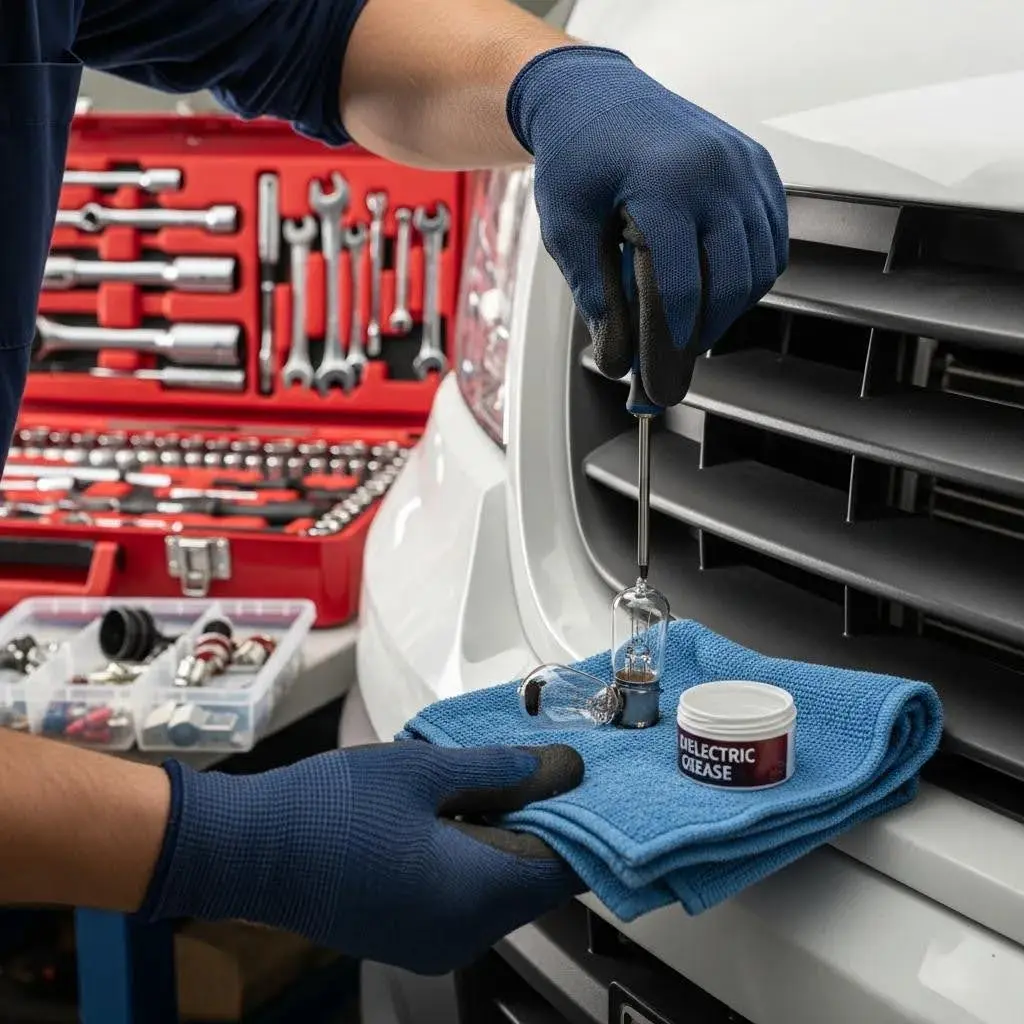
Small repairs can increase buyer confidence and sometimes raise the sale price enough to cover the cost. Not every fix is worth doing, focus on common items like bulbs, tyres, wipers, small bodywork and fluid top-ups.
Compare each repair cost to the likely uplift in a private sale. The guidance below helps you decide what to do and what to skip if you plan to sell as-is to a specialist buyer.
Minor Repairs, Practical Examples
Here are typical minor repairs, rough costs and when fixing them usually pays off. Replacing bulbs and topping up fluids are cheap and remove common objections.
Tyres or body repairs can be more expensive; if the van has major mechanical faults or missing papers, the return on those repairs falls and selling to an instant buyer may be the better option. Weigh time, cost and expected uplift before starting work.
| Repair | Typical cost (indicative) | When to skip and sell as-is |
|---|---|---|
| Bulb replacement | Low (a few pounds) | Rarely skip, quick, inexpensive fix for viewings |
| Fluid top-ups | Very low | Do this before viewings to avoid buyer concern |
| Small dent & paint | Low to medium | Skip if repair cost approaches the likely uplift |
| Tyres (partial) | Medium to high (varies by extent) | Replace only if safety or saleability is affected |
Generally, small, low-cost fixes make sense for a private sale. Costly body or tyre work should be weighed against the convenience of selling to an instant buyer who can accept vans in a wide range of conditions.
How Can You Maximize Your Van’s Sale Value Without Extensive Preparation?
If you want a quick sale without full restoration, focus on high‑impact, low‑effort steps: remove clutter, take clear photos, write an honest advert, and present the documentation you do have.
These actions take little time but noticeably improve online interest and the number of viewings. The short tips below rank actions by impact and effort so you can choose between a quicker private sale or an instant‑buy service.
Quick Tips To Boost Your Van’s Value Before Selling
These quick actions take 30–60 minutes and improve marketability: remove personal items and secure loose tools, clean the cab and load area, photograph in daylight from multiple angles, list mileage and known faults clearly, and mention recent MOTs or services in the advert.
Keep descriptions short and honest and highlight useful extras (racking, tow bar) to attract the right buyers. These steps reduce renegotiation and speed up the sale.
Preparing A Van For Sale With Cash: Your Vans
If you want a hassle-free option, Cash Your Vans offers a simple route: get an instant quote, book free nationwide collection, and receive immediate payment.
We buy vans in a wide range of conditions, including damaged or non-runners, and often handle most of the paperwork. This three-step approach suits sellers who prioritise speed and certainty over squeezing out the last pound. If you want to sell qui
The table below lists quick actions you can take, how long they take and the likely effect on saleability or price, to help you compare low‑effort prep with an instant sale.
| Quick Action | Effort / Time | Potential effect on saleability/value |
|---|---|---|
| Remove clutter and personal items | 15–30 minutes | Boosts buyer interest and suggests good care |
| Take daylight photos of key areas | 15–30 minutes | Significantly increases online enquiries |
| List mileage and known faults honestly | 10–15 minutes | Builds trust and reduces renegotiation |
| Mention recent MOT or service | 10 minutes | Improves buyer confidence and can lift price |
These comparisons show modest prep can improve private‑sale outcomes, while instant‑buy services are a practical alternative when time, condition or paperwork make private selling difficult.
Frequently asked questions
When Is The Best Time Of Year To Sell A Van In The Uk?
Spring and summer (roughly March to August) are usually the busiest months. Buyers are more active, and the weather makes viewings and photos easier. That said, local demand and your vehicle type can change timing, if you have a specialist van, buyer interest may be steadier year‑round.
How Do I Set The Right Asking Price For My Van?
Compare similar models in your area on online marketplaces and classified sites. Look at age, mileage, condition and extras, and use valuation tools like Glass’s Guide or Parkers for guidance. Start with a realistic price and leave a little room for negotiation, be prepared to adjust based on buyer feedback.
Should I Offer A Warranty Or Guarantee When Selling?
Offering a short warranty can reassure buyers and may help you get a better price, but it’s not required. If you do offer one, state clearly what’s covered and for how long. If you sell to an instant buyer, warranties are usually unnecessary since they typically buy vehicles as‑seen.
What Should I Do If My Van Has Mechanical Issues?
If issues are minor and cheap to fix, a repair can raise the sale price. For costly or uncertain repairs, selling as-is, especially to an instant buyer, is often simpler. Be honest about faults in your listing and factor them into your asking price to keep negotiations straightforward.