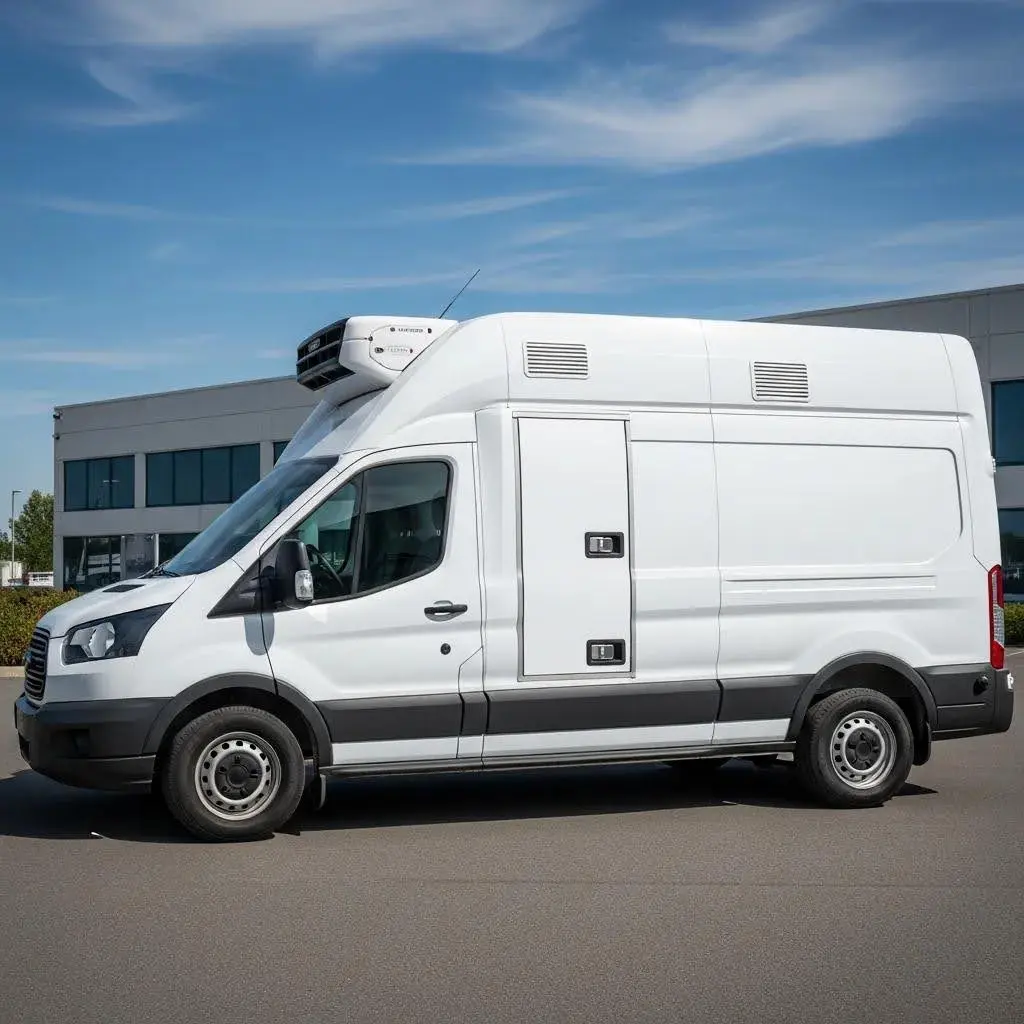
Selling a refrigerated van fast in the UK means converting a specialised commercial vehicle into cash quickly, with minimal hassle and clear timelines. This guide explains how to sell a refrigerated van fast in the UK by covering the market realities that slow private sales, the valuation drivers that set realistic prices, and practical steps to speed a sale whether your van is a chiller, freezer or multi-temp unit.
Many sellers find that refrigeration-specific issues, a narrow buyer pool and collection logistics are the main obstacles; this article shows how to overcome them and where professional buyers add value.
You will get a clear comparison of private sale versus professional sale, a step-by-step selling process, a breakdown of valuation factors (age, mileage, refrigeration unit condition) and practical advice for vehicles in any condition, including damaged units, non-runners and MOT failures.
Why Is It Hard to Sell a Refrigerated Van Privately in the UK?
Refrigerated vans are harder to sell privately because they combine a specialized refrigeration unit with the usual commercial vehicle attributes, which reduces the pool of suitable private buyers and increases perceived risk.
Private purchasers often worry about refrigeration unit faults, insulation integrity and compliance for temperature-sensitive loads, all of which require technical knowledge to assess; this narrows demand and lengthens time on market.
Logistical hurdles such as arranging collection, proving MOT history and transporting a specialist body raise costs for buyers, which lowers the offers sellers receive. Understanding these private-sale barriers helps sellers decide between investing in repairs or choosing a professional buyer who can remove friction quickly and reliably.
The most common private-sale pain points include limited buyer interest, uncertain refrigeration unit health and the need to manage collection and paperwork, which together can extend a sale by weeks or months.
To speed a sale, sellers can prepare accurate descriptions, detailed photos of the refrigeration unit and bodywork, and clear documentation of MOT and service history. If these steps are impractical or the van has mechanical or refrigeration faults, a professional buyer can offer a faster, lower-risk route that removes the burden of marketing and complex logistics.
How Refrigerated Vans Differ from Other Commercial Vehicles
Refrigerated vans are temperature-controlled commercial vehicles that include refrigeration units, insulated panels and temperature control systems, all of which directly influence operational cost and resale value.
The refrigeration unit (compressor, evaporator, condenser), insulation integrity and thermostat accuracy are key components whose condition determines whether a van suits food, pharma or general chilled logistics. Repairs to compressors or breaches in insulation can be costly and are often underestimated by private buyers, who factor potential repair bills into lower offers.
Because of these technical stakes, buyers require clear evidence of unit maintenance and recent performance checks before offering market-rate prices.
Sellers should note that bodywork affecting insulation, odour issues and visible wear on evaporators are immediate red flags for purchasers, shifting a private-sale negotiation toward lower offers or repair demands.
Documenting maintenance history, providing temperature logs if available, and describing any known faults clearly builds confidence and speeds buyer decisions. These technical concerns set up the core trade-off sellers face: invest time and money to repair for a private sale or accept a fast, certain sale through a professional buyer who accepts the specialised risk.
Benefits of Professional Buyers for Fridge Vans
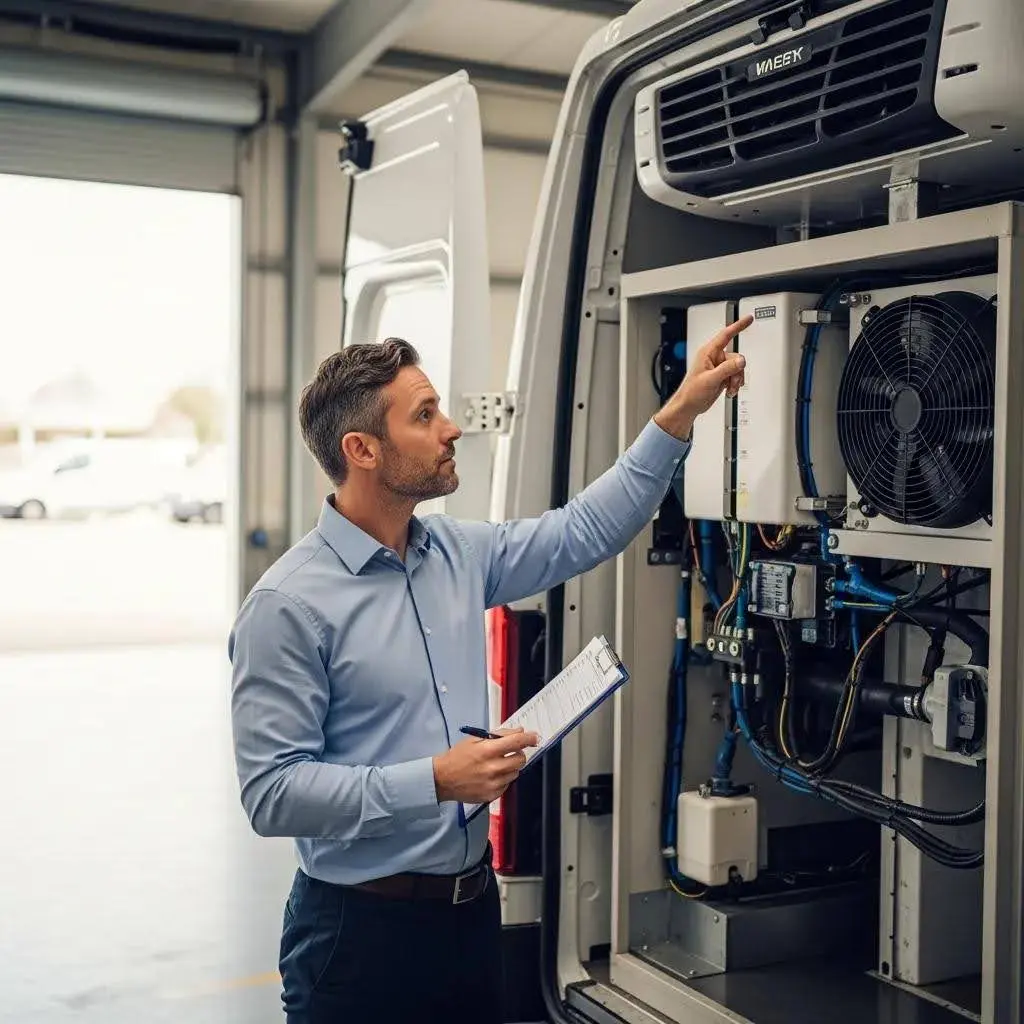
Professional buyers specialise in commercial and temperature-controlled vehicles and streamline sales through expertise, fixed processes and nationwide logistics, making them attractive for sellers who prioritise speed and certainty.
Unlike private buyers, professionals evaluate refrigeration units using standard criteria, price for condition transparently, and often handle recovery of non-runners or vehicles with MOT failures.
Selling to a professional removes the need for prolonged marketing, multiple viewings, and negotiating with buyers unfamiliar with refrigeration systems, which collectively reduces time on market and the administrative burden on the seller.
- Faster Sale Process: Professionals typically move from valuation to collection in days rather than weeks.
- Reduced Seller Effort: They handle paperwork, logistics and vehicle collection, removing the need for ads and buyer vetting.
- Clear Condition-Based Pricing: Offers reflect known unit and body conditions, avoiding late-stage renegotiation.
How Does Cash Your Vans Help You Sell Your Refrigerated Van Fast?
Cash Your Vans is a UK-based company specialising in the fast purchase of vans, trucks, and motorhomes, and offers a three-step approach designed to move sellers from quote to payment with minimal delay. Their core process focuses on an instant quote, free nationwide collection, and immediate payment via cash or bank transfer, which removes the main friction points in private sales.
The company accepts vehicles in any condition, including MOT failures, damaged vehicles, and non-runners, enabling sellers to convert difficult or costly-to-repair fridge vans into cash quickly. This professional route is designed for speed and certainty while reducing seller effort on advertising, viewings and negotiation.
The service clearly links common seller needs (speed, convenience, certainty) to concrete outcomes: a rapid online or phone valuation, a scheduled free collection across the UK, and on-the-spot payment to complete the sale.
For many sellers, this removes weeks of uncertainty and the costs associated with prepping a van for the private market. The process and exact benefits are explained in detail below, including an EAV-style table showing how each step produces a measurable benefit for the seller.
| Step | Attribute | Benefit/Outcome |
|---|---|---|
| Instant Quote | Speed of valuation | Rapid clarity on market value; quick decision-making |
| Free Nationwide Collection | Logistics fully handled | No transport or collection costs; convenient scheduling |
| Immediate Payment | Payment timing | Seller receives cash or bank transfer on collection |
This table demonstrates how each element of the Cash Your Vans process addresses typical seller pain points and shortens the time from decision to payment, making it a practical alternative for sellers who need speed and certainty.
Key Benefits of Selling Your Fridge Van For Cash Your Vans
Sellers who choose Cash Your Vans gain speed, convenience and the certainty of immediate settlement without needing to undertake costly repairs or lengthy advertising, which is valuable for busy operators or fleet disposals.
The instant quote removes guesswork, free nationwide collection eliminates logistical hassle, and immediate payment via cash or bank transfer provides financial certainty at the point of sale.
Because the company accepts vehicles in any condition, including MOT failures, damaged vehicles, and non-runners, sellers can avoid the downtime and expense associated with preparing a van for private viewings and repairs.
- Speed: Convert the vehicle to cash quickly without waiting for private buyers.
- Simplicity: One transaction handles valuation, collection and payment.
- Condition-flexibility: Vans with refrigeration faults or MOT issues are still acceptable.
An anonymised seller scenario illustrates the outcome: a small catering firm with a faulty compressor chose the professional route to avoid repair delays and received a same-day valuation with collection scheduled within 48 hours, freeing up cash and reducing operational disruption. This real-world outcome highlights why professional buyers matter for sellers prioritising speed.
Instant Quote and Payment Process
To secure an instant quote from a professional buyer like Cash Your Vans, you provide essential vehicle details, make, model, age, mileage, refrigeration unit type and condition, plus MOT status, so the buyer can apply condition-based pricing rapidly. The quote is delivered instantly online or by phone and reflects valuation drivers such as refrigeration unit health, insulation condition, and market demand for that van type.
If you accept the offer, the buyer arranges free nationwide collection and provides immediate payment by cash or bank transfer at collection, completing the sale in one streamlined transaction. Typical timeframes move from instant quote to collection within days, depending on scheduling and location.
- Provide vehicle details: Model, refrigeration specifics, MOT status, and photos.
- Receive instant quote: Online or phone valuation based on condition.
- Agree sale and schedule collection: Free nationwide collection and immediate payment.
What Types of Refrigerated Vans Can You Sell in the UK?
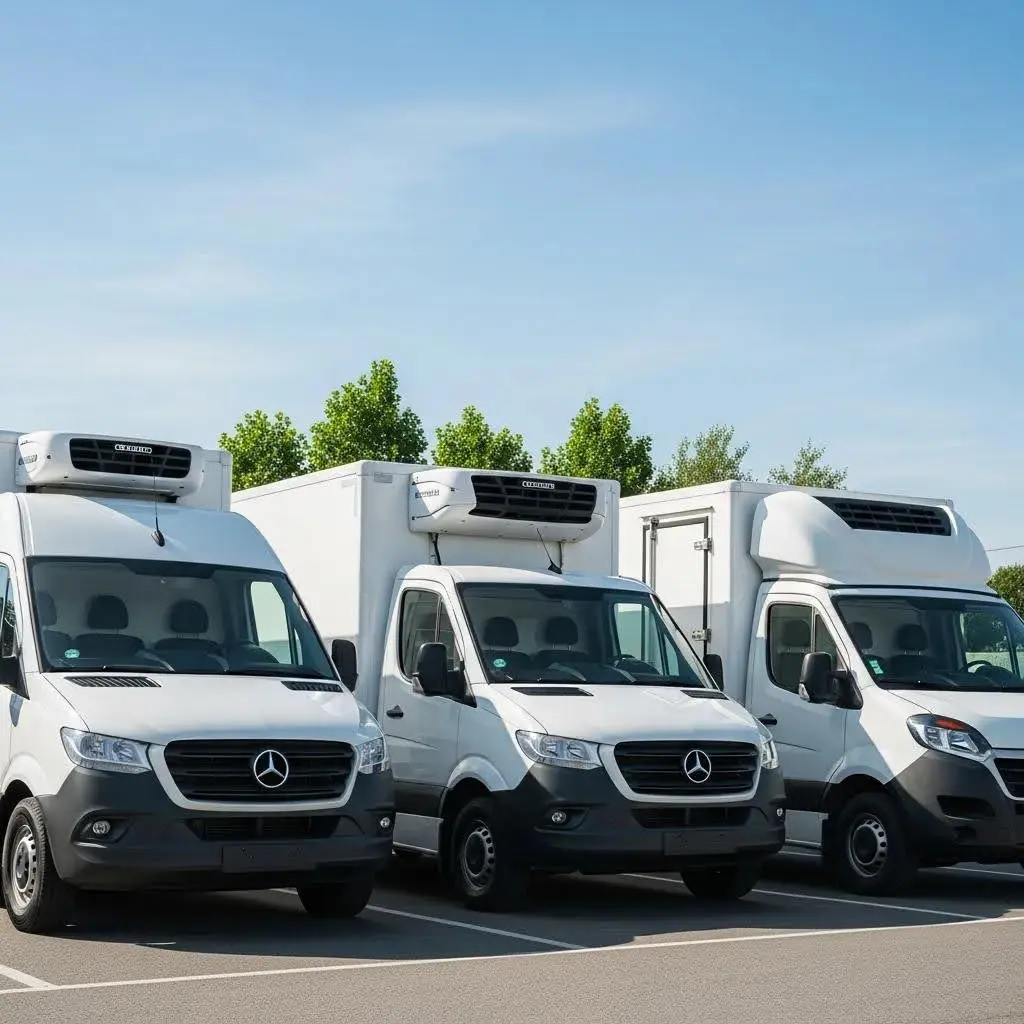
Refrigerated vans come in several main categories: chiller vans, freezer vans, and multi-temp vans, each serving specific industries and temperature ranges, and each attracting different buyer groups and valuations.
Chiller vans typically operate between 0–8°C and appeal to food delivery and catering sectors; freezer vans operate at sub-zero temperatures for frozen goods and often require more specialised buyers; multi-temp vans provide compartmentalised temperatures for mixed loads and may command higher interest because of flexibility.
Understanding which type you have helps target buyers and set realistic expectations for refrigerated van valuation in the UK.
The following table summarises typical types, their temperature ranges, and common use cases to help sellers identify their van and estimate likely buyer interest and demand.
| Van Type | Typical Temperature Range | Typical Use Case / Buyer |
|---|---|---|
| Chiller van | 0–8°C | Fresh food delivery, catering, supermarkets |
| Freezer van | Sub-zero (e.g., -18°C) | Frozen goods distributors, specialist food retailers |
| Multi-temp van | Multiple compartments | Multi-product routes, catering and mixed logistics |
This comparison clarifies how each refrigerated van type aligns with buyer demand: chiller vans suit high-volume food logistics, freezer vans need specialist markets, and multi-temp units often attract buyers seeking flexibility. With type identified, the next subsection lists common chassis and conversions you’ll encounter on valuations.
Refrigerated Van Types We Buy: Chiller, Freezer, and Multi-Temp
Professional buyers purchase chiller, freezer and multi-temp refrigerated vans because each type serves clear market niches; chiller vans are favoured by daily fresh-food distribution, freezer vans by frozen supply chains, and multi-temp conversions by operators needing route flexibility.
Buyers assess refrigeration unit capability, insulation condition and compartment layout to determine suitability for intended use. Sellers should state the van’s typical operating range and highlight any recent service to the refrigeration unit when requesting a quote, as documented maintenance increases buyer confidence and may improve offers.
Recognising which type you have narrows the buyer pool but clarifies the value drivers that matter most.
Commonly Accepted Makes and Models
Most professional buyers accept common LCV and panel van chassis that have been converted into refrigerated bodies, such as small and medium vans used by food and catering sectors, and larger conversions for commercial distribution.
While conversions vary, buyers look for reputable chassis platforms and solid conversion workmanship; well-known van sizes and reliable base models usually attract more interest than obscure custom builds.
Sellers with widely recognised chassis and neat conversions typically receive stronger offers, whereas heavily customised units or non-standard conversions may require more detailed inspection and price adjustment. A clear description of the make, base model and conversion quality helps buyers match your van to likely purchasers quickly.
How to Sell Your Refrigerated Van in Any Condition: Damaged, Non-Running, or MOT Failures
Even vans with refrigeration damage, non-running engines, or MOT failures can be sold quickly if you choose the right route; professional buyers price for known faults and arrange collection, reducing seller risk and time to receive funds.
Damage to refrigeration units, compressor faults, refrigerant leaks, or insulation breaches lowers value but does not always prevent sale because buyers may repair, part-out, or resell the chassis.
Non-runners and MOT failures primarily affect logistics and transfer paperwork, but free nationwide collection and condition-aware valuation allow sellers to finalise a sale without costly repairs or prolonged marketing.
When you describe a damaged or non-running van accurately, professional buyers give condition-adjusted offers so there are no late-stage surprises, and they often accept vehicles “as seen” with immediate payment on collection.
The following subsections explain how specific conditions affect valuation and logistics, and give practical seller guidance for describing faults and preparing for collection.
Selling a Van with a Damaged or Broken Refrigeration Unit
Yes , a damaged or broken refrigeration unit reduces value but professional buyers will still purchase such vans, often offering reduced yet fair prices that reflect repair or part-out costs.
Typical refrigeration issues include compressor failure, evaporator ice build-up, thermostat faults and insulation breaches; when you report these clearly, buyers can apply known downgrade factors to give an accurate quote.
Sellers should describe the fault, note any recent service attempts, and supply photos; transparency speeds the valuation process and prevents renegotiation at collection. Professional buyers may choose to repair, strip the refrigeration components for parts, or sell the vehicle for salvage, depending on severity, which provides realistic exit options for sellers.
Selling a Non-Runner or MOT-Failure Van
If the van is a non-runner or has failed MOT, professional buyers factor collection complexity and repair expectations into the offer but still complete transactions swiftly by handling transport and paperwork.
Free nationwide collection removes the logistical barrier for sellers, and buyers will request documentation such as V5C and MOT certificates, where available, to complete transfer formalities.
Valuations for non-runners are typically lower to account for towing and mechanical repair costs, but the trade-off is speed and certainty of sale, removing weeks of negotiation and repair cycles. Prepare by listing known faults, clarifying whether the vehicle can be recovered on its wheels, and having ownership documents ready to accelerate completion.
What Factors Affect the Value of Your Refrigerated Van in the UK?
Several valuation drivers determine how much you can expect when you sell a refrigerated van in the UK, with refrigeration unit condition, age, mileage, conversion quality, and current market demand among the most important.
Buyers evaluate the refrigeration unit (compressor, evaporator, insulation), the integrity of insulated panels, and any history of repairs because these core components directly affect operational reliability.
Age and mileage set baseline depreciation, while conversion workmanship and recognised chassis increase buyer confidence and marketability; seasonal demand from food and pharma sectors also shifts price expectations. Understanding these factors helps sellers set realistic targets or decide whether investing in repairs is financially sensible.
Before reviewing the EAV table, note that providing clear, accurate information about these attributes shortens valuation time and improves quote accuracy, so gather service records, MOT history, and current photos before requesting an instant quote.
The following EAV-style table maps key entities and their attributes to the typical impact on value to help you prioritise which details to present to buyers.
| Valuation Factor | Attribute | Typical Impact on Price |
|---|---|---|
| Refrigeration Unit | Condition (compressor, thermostat) | High , major determinant of usable life |
| Age & Mileage | Years / miles | Medium , sets baseline depreciation |
| Insulation & Bodywork | Panel integrity, odour, rust | High , affects operational suitability |
| Conversion Quality | Workmanship, reputable converter | Medium , influences buyer confidence |
| Market Demand | Seasonal/sector demand | Variable , can raise or lower offers |
This table clarifies that refrigeration unit health and insulation integrity often have the largest impact on price, while age, mileage, and conversion quality also matter; sellers can use this to prioritise documentation and honesty when seeking an instant quote.
How Age, Mileage, and Refrigeration Unit Condition Affect Price
Age and mileage establish the van’s baseline depreciation and expected remaining service life, with older high-mileage vans typically attracting lower offers, all else equal. Refrigeration unit condition, however, can outweigh age: a well-maintained compressor and intact insulation will preserve value, whereas a recent compressor failure can sharply reduce offers because replacement costs are high.
Sellers should provide service records, recent maintenance receipts, and clear photos of evaporators and compressors to demonstrate upkeep; these details help buyers refine valuations and can sometimes offset higher mileage or age with proof of component care.
Presenting accurate information about these attributes shortens the quote process and reduces the chance of price drops on collection.
How Market Demand Affects Your Van’s Selling Price
Market demand fluctuates with sector needs; food logistics, catering, grocery, and pharma demand will increase interest in specific types and sizes of refrigerated vans, and seasonal spikes (e.g., holiday trading) can push prices higher.
Newer refrigeration technologies and greener units may command premiums as buyers seek fuel-efficient and compliant fleets, whereas older models without modern controls face higher depreciation. Regional variations across the UK also matter: urban areas with dense food distribution networks often show stronger demand than remote regions.
Timing your sale to coincide with peak demand for your van type and being transparent about refrigeration performance increases the chance of securing a better price.
Frequently Asked Questions
This section answers the practical questions sellers commonly ask, giving concise guidance on speed, buyer types, quoting and collection timelines to reduce uncertainty. Sellers often want direct advice: whether refrigerated vans are hard to sell quickly, who buys them, how to get a quote and how long free nationwide collection takes.
Clear, short answers followed by practical tips help sellers act quickly and choose between private listings and professional buyers based on their priorities.
Are Refrigerated Vans Hard to Sell Quickly in the UK?
Refrigerated vans are comparatively harder to sell quickly in the private market because specialised refrigeration components and a narrower buyer pool increase friction, but professional buyers provide a fast route to cash and remove most delays.
To speed a private sale, prepare accurate descriptions, include clear photos of the refrigeration unit and body, and price competitively based on documented faults. If you prioritise certainty and speed over maximum price, accepting a professional offer often completes the sale within days rather than weeks. These steps help sellers choose the fastest practical route for their circumstances.
Who Buys Refrigerated Vans and How Do I Get a Quote?
Buyers include fleet operators, specialist refrigerated vehicle traders, converters and companies needing specific temperature ranges for distribution; each buyer type values different attributes such as compressor condition, insulation quality and chassis reputation.
To get an instant quote from a professional buyer, provide vehicle make, model, mileage, refrigeration unit type and condition, conversion details and MOT status, along with photos of the unit and bodywork.
Expect an immediate online or phone valuation from professional buyers and conditional offers that reflect reported faults; accurate descriptions speed up the process and reduce renegotiation risk. Knowing who buys and what they prioritise helps you present the right information for a quick quote.
How Long Does the Free Nationwide Collection Take?
Free nationwide collection timelines depend on the buyer’s scheduling and your location, but professional services typically offer collection windows from same-day to a few days after the sale is agreed, with regional variance for remote areas.
Factors that affect timing include vehicle condition (non-runners may need specialised recovery), location, and current collection demand; buyers will often provide a scheduled slot and confirm paperwork required for transfer.
Prepare the V5C, MOT, and any service records to accelerate collection and ensure immediate payment on handover. Understanding these factors helps sellers set expectations and plan for a quick, smooth handover.
- Prepare documents: Have V5C and MOT ready to speed transfer.
- Photograph faults: Clear images reduce inspection delays.
- Agree on collection slot: Confirm scheduling to avoid hold-ups.
These practical tips reduce uncertainty and help guarantee a fast sale and collection when working with a professional buyer.
For sellers ready to move quickly, remember the primary goal of this guide: to encourage users to get an instant quote and sell their van, truck, or motorhome to Cash Your Vans.